
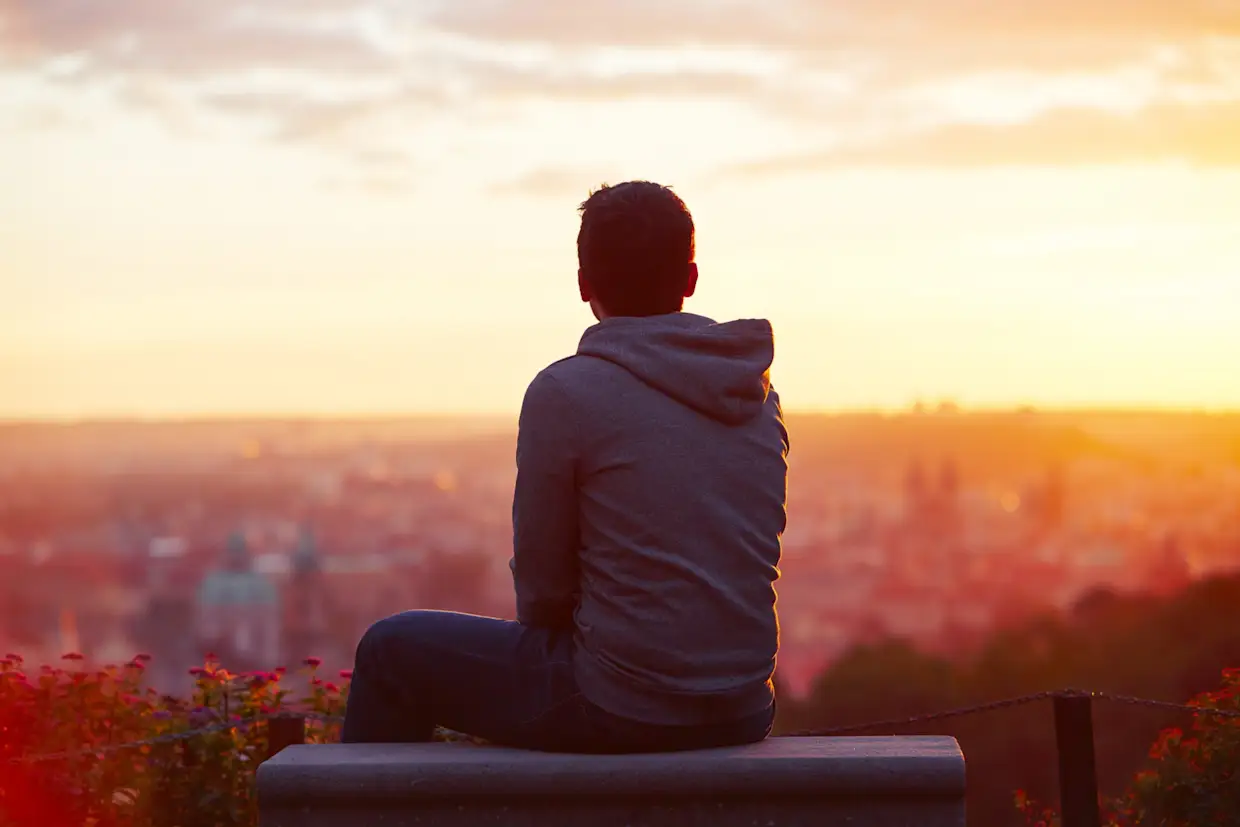
Australians think we are the friendliest people on earth. The truth is most of us are strangers to each other. Loneliness, the blight of isolation, is more common than ever.
The Beatles’ Eleanor Rigby asks “All the lonely people/Where do they all come from?” There is an answer. They are our neighbours, often the people we walk pass every day, who rarely hear a “good morning” salutation from us.
This matters socially, culturally, and economically. Research and community initiatives are worth noticing. There are fresh insights on the problems and answers.
On the economics and societal challenges, according to the Bankwest Curtin Economics Centre’s Stronger Together: Loneliness and Social Connectedness 2021 report, loneliness costs the Australian taxpayer about $2.5 billion annually in health utilisation costs – more frequent visits to hospital and to the GP.
Now Professors Michelle Lim and Ben Smith of the University of Sydney have just released the confronting 2026 The State of the Nation report on “Understanding and Rebuilding Social Connection in Australia”.
This warrants consideration of community ideas that might moderate or mitigate against the costs to individuals and society.
The authors observe: “When … healthy social habits erode, the consequences for individuals, families, and communities are profound. Our risk of chronic disease, serious mental illness and premature death increases, and the sense of connection and belonging to people and places disappears.”
Social cohesion, the ‘S’ in ESG – the social – needs to shift from abstract to the practical.
“The research shows family cohesion, community relationships, and volunteering all help reduce risk.”
The 2026 study sampled 4001 Australians aged 12-95 years old across the nation. Data was weighted by age, gender, and region to reflect the latest Australian Bureau Statistics (ABS) population estimates.
“Social disconnection, loneliness and social isolation” was measured according to the University of California Los Angeles Loneliness Scale. Without delving into the methodologies, they found loneliness and social isolation was prevalent across all the lifespan.
Interestingly, 18-25-year-olds are the loneliest (18 per cent) but the least socially isolated; 45-54-year-olds are also the loneliest and socially isolated (28 per cent). Those aged 65-74 are also socially isolated.
About one in two people (51 per cent) met criteria for either loneliness and/or social isolation. Not much has changed since their last survey in 2023. This is alarming. Social disconnection is bad for health and wellbeing.
The report focused on solutions and prosocial actions. Tellingly, socially disconnected people (because of loneliness, social isolation, or both) have a lower tendency to do things for the benefit of others – such as showing kindness, offering help – compared with those who are socially connected.
Living in a cohesive, neighbourly community where people can trust and help each other can reduce the risk of loneliness and social isolation. This is easier said than done. but regularly chatting with neighbours reduces the risk of loneliness and social isolation by 88 per cent, social isolation by 66 per cent, and loneliness by 56 per cent.
What is needed are accessible spaces (infrastructure, activities and aligned initiatives) that bring people together to facilitate healthy social connection.
Les Murray’s poem Faster-than-light Loneliness states: “our thought balloons are coated invisible/ no one there sees us and we can’t get out to be real or present”.
Loneliness is no mere personal matter: it is a societal problem. It is about the ecosystem of communities, schools, workplaces, business, and policies all work together in order to make a difference in people’s lives.
The research shows family cohesion, community relationships, and volunteering all help reduce risk. More generally, high-pressure workplaces, stress, and financial strain can work against individuals’ ability to dedicate the time necessary to nurture their relationships.
What we can do
The Little Big Foundation, a not-for-profit at Summer Hill in Sydney’s Inner West, is a pioneer of building social infrastructure and spaces with active curation. There are now 60 to 90 events held per month in a two-story heritage building. There are more than 60 tenants and wider community volunteers, organising their own events, including a monthly community market – not just for the immediate residents, but for a two-kilometre surrounding catchment area. A director is employed full-time to make this work.
Nothing in the government urban planning system encourages or facilitates such initiatives, especially on an ongoing basis. Even where developers “donate” community spaces or assign them to local councils, they usually fail. This is because there’s no-one who manages or leads. It is not seen as community space.
It is one thing to design for human connectivity in theory. It is quite another to walk through a physical space built for this purpose and see how it actually works day-to-day, to experience the quirks and practice of bringing people together.
It is sensible to focus locally on what works where local residents and businesses get a handle on the issues within their community and together improve it. Tapping the volunteer spirit in Australians is needed.
This is not a “big government” challenge – though government support and positive regulation can assist. It is a challenge for all of us.
Loneliness, what it means and the damage it causes, and facilitating a healthier community in response, are challenges which no longer should be buried away in silence.
Michael Easson AM is Executive Chair of EG Funds management, which supports the Little Big Foundation. Loneliness Awareness Week in Australia runs from 3-9 August, with the theme “Make Room for Connection”.
Full article here: https://www.afr.com/life-and-luxury/health-and-wellness/big-government-can-t-end-loneliness-blight-20260802-p60kmd
AUTHOR: MICHAEL EASSON
THIS ARTICLE ORIGINALLY FEATURED IN THE AUSTRALIAN FINANCIAL REVIEW on AUGUST 2, 2026