
Loneliness doesn’t always need a big, formal solution. Sometimes, it’s the small, human ideas, tucked into everyday life, that make the biggest difference. Around the world, people are re-imagining ordinary places and routines as opportunities for connection: a checkout line, a park bench, a bus ride, a shared garden.
We hope these reminders that connection can be built anywhere, if we choose to make space for it.
CHATTY BUSES
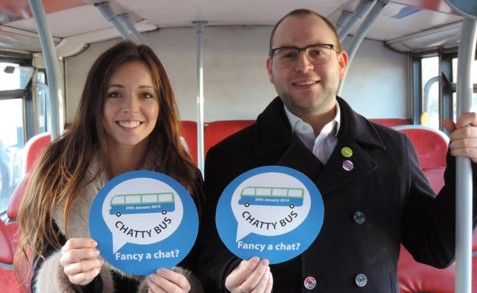
In the UK, initiatives like the Chatty Bus are turning everyday travel into an opportunity to feel less alone. Led by charities like Campaign to End Loneliness and supported by transport operators, certain buses and trains now invite conversation — with volunteers on board, “Happy to Chat” badges, and even special chat-friendly carriages.
The idea gained national attention when the BBC trialled chat carriages and conversation cards on public transport. The response? Mixed at first (old habits die hard), but many passengers welcomed the option. One survey found a third of people catch the bus specifically for human contact — proof that transport can be a lifeline.
Today, “Chatty Bus Champions” ride routes in places like Oxfordshire and Buckinghamshire, offering friendly conversation and pointing riders to local community groups. Other countries are now watching closely.
GREEN SPACES
What if reducing loneliness was as simple as growing something together?
Across Europe, community gardens are becoming powerful places of connection — where neighbours meet naturally, share purpose, and feel they belong. These spaces turn unused land into a “public living room”, sparking conversations, collaboration and care.
🌿 Why they work
- Low-pressure reasons to show up
- Shared purpose builds trust
- Strangers become collaborators
- Belonging grows alongside the food
TALKING POST BOXES
Listen up...Post Boxes are talking, literally. Australia Post and Beyond Blue have teamed up last year to launch Australia’s first-ever interactive, talking Post Boxes in Canberra, Sydney and Traralgon. These fun, playful installations use smart sensors to grab attention and prompt Aussies to slow down, pick up a pen and connect with others by sending a postcard the old-fashioned way.
The cheerful talking Post Boxes echo the campaign’s message with lines like:
- “You can make a difference with a connection.”
- “A little hello goes a long way.”
- “Send a note to someone special.”
- “Give them a laugh—send a free postcard from your local Post Office.”
THIRD PLACES
Third places are the spaces that sit between home and work — and they matter more than ever.
They’re the cafés, libraries, community hubs, parks and Little BIG Houses where people can show up as they are, without pressure to buy, perform, or belong to a specific group. Third places make room for chance encounters, familiar faces, and everyday connection. They’re where community quietly forms — one conversation, one shared moment at a time.
FRIENDHSIP BENCHES
Harare, Zimbabwe, psychiatrist Dixon Chibanda created the Friendship Bench after seeing how few people could access mental health care. His idea was beautifully simple: train local grandmothers in evidence-based talk therapy and place them on park benches, ready to listen.
What happened next was powerful. These warm, non-clinical conversations reduced stigma, eased loneliness and depression, and helped people feel supported by their community — like talking with a wise relative rather than visiting a clinic.
Since 2006, more than 3,000 community grandmothers have supported 300,000+ people. The model has now spread globally, reaching cities like New York and London, proving that care doesn’t always need a clinic. Sometimes it just needs a place to sit and someone who truly listens.
RENTAL FAMILY
Have you seen Rental Family (2025), the heartfelt film starring Brendan Fraser about a man who takes a job acting as “stand-in” friends and family for people who need someone to show up in their lives? The story is inspired by real paid companionship and rental-family services in Japan which exists to support growing loneliness.
It might sound unusual, but for many, it meets a very real need. In a culture where being alone can carry stigma, these services offer connection without judgement, a way to feel seen, included, and supported. Some older clients hire someone regularly just to enjoy conversation over dinner. Others use the experience to build confidence and eventually form friendships of their own.
FREE RENT FOR STUDENTS IN AGED-CARE HOMES
Across cities, students are struggling to find affordable housing — while many older people experience deep social isolation, with real impacts on health and wellbeing.
In Humanitas Retirement Village in Deventer, one simple idea is changing both. Students live rent-free in the retirement village in exchange for 30 hours a month spent supporting and connecting with older residents. They help with everyday tasks, teach digital skills, and, most importantly, share time and companionship.
The result? Stronger relationships, reduced loneliness, and a genuine sense of community across generations.
The model is now spreading, with similar programs appearing in France and the US — a powerful example of how shared living and mutual care can activate the “urban commons.”
(Featured by PBS NewsHour and CityLab. Case study adapted from the book Sharing Cities: Activating the Urban Commons.)
GRANDKIDS ON DEMAND
In the U.S., a platform called Papa is re-imagining intergenerational connection. Often described as “grandkids on-demand”, Papa connects older adults with vetted college students and young adults — known as Papa Pals — for companionship, conversation, and help with everyday tasks.
These paid visits (in person or virtual) offer something simple but powerful: time, friendship, and a human presence — especially for older people without family nearby. The impact has been significant. Some health insurers now prescribe Papa visits to address social isolation, with early results showing reduced loneliness, fewer emergency room visits, and lower healthcare costs.
It’s an unconventional idea, blending the gig economy with care, but one that’s gaining momentum as societies grapple with ageing populations and growing disconnection.
BLUE-GREEN CORIDORS
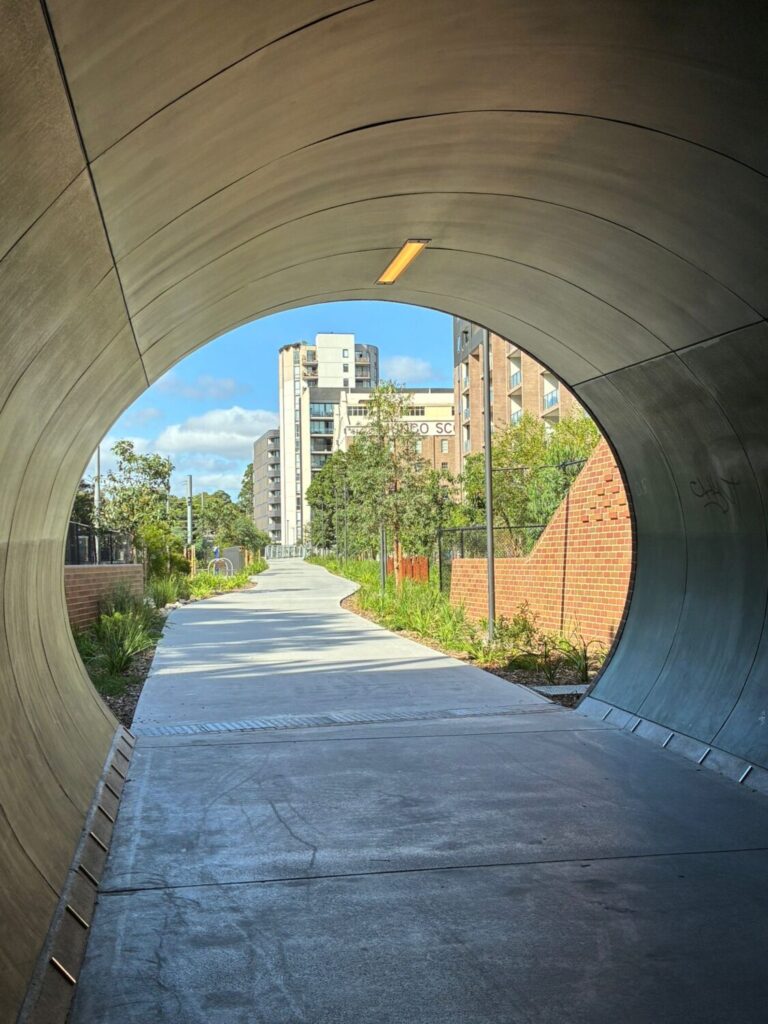
Blue–green corridors link water, vegetation and people through continuous networks that weave nature back into cities. By connecting rivers, wetlands, parks and greenways, they turn fragmented urban spaces into living systems — supporting wildlife, movement and everyday human connection.
Why they work
- Nature becomes a pathway, not a pocket
- People move, walk and ride through shared green space
- Wildlife and habitats reconnect and thrive
- Cooling, shade and water management build climate resilience
By stitching blue (water) and green (nature) into the grey of our cities, these corridors quietly create connection — between ecosystems, neighbourhoods and the people who live there.
CHATTY CHECKOUTS
Sometimes innovation means slowing down operations rather than speeding them up. That’s the approach Dutch supermarket operator Jumbo has taken with its Kletskassa — which translates to “chat checkout” in English and French supermarket chain Carrefour 's “Blablabla checkouts.”
Just like the names suggest, these checkout counters allow customers and cashiers to leisurely chat with each other. This allows lonely customers and those with a little more time to have a friendly chat, take their time and strengthen their local community ties.
The supermarket chain’s “chat checkout” lanes have recently expanded to more than 100 stores. Should we have it in Australia?
This is one idea of many from around the world. We are sharing these to inspire you to build more connection into your life.
HUMAN LIBRAIES
The Human Library is a global initiative where people become the books. Founded in Copenhagen in 2000, it invites people to “borrow” a human book for a one-on-one conversation, creating space to listen, ask questions, and challenge assumptions.
Readers choose from a catalogue of lived experiences — from mental health journeys to cultural identity, migration, and more — and spend around 30 minutes in open, respectful dialogue. The goal is simple but powerful: to unjudge someone.
Held in libraries, schools, workplaces and festivals around the world, Human Libraries show how understanding grows when people who might never meet sit down and talk.
ROBOT PETS
In Japan, a therapeutic robotic seal called Paro is being used in hospitals and aged care homes to support people living with dementia. Designed to respond to touch, sound and its name, Paro offers gentle interaction — blinking, moving and making soft sounds — much like a living companion.
Research suggests robot pets like Paro can help reduce stress, encourage social interaction and support emotional wellbeing for both residents and carers. Paro is now used in dozens of aged care facilities in Japan, sometimes alongside entire teams of care robots.
This idea has spread globally. In the US, UK and France, semi-humanoid robots like Pepper and Zora have been trialled in nursing homes — with surprising results. A 2018 report by The New York Times described residents forming real emotional bonds with Zora, holding and comforting the robot as if it were a baby.
It raises a fascinating — and tender — question:
Can technology help meet our deeply human need for comfort and connection?
Taken together, these ideas show that connection doesn’t have to be complicated, clinical or costly. From supermarkets and buses to benches, gardens and shared homes, loneliness is eased when everyday spaces invite us to slow down, notice one another and belong. Whether designed through policy, place, or simple permission to talk, these initiatives remind us that community is built in the ordinary moments we often overlook. When we design our cities, services and systems with connection in mind, we don’t just reduce loneliness — we create places where people can genuinely flourish.